Crushed Stone and Crusher Run: The Backbone of Modern Construction
The aggregates industry plays a pivotal role in infrastructure development, with crushed stone and crusher run being among the most widely used materials. Crusher run, a blend of angular crushed stone and fine stone dust, is prized for its compaction properties, making it ideal for road bases, driveways, and foundation support. Understanding its conversion from tonnes to cubic meters (m³) is critical for accurate material estimation and cost efficiency in construction projects.
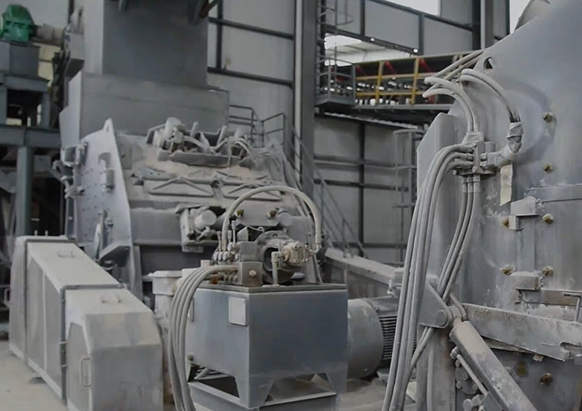
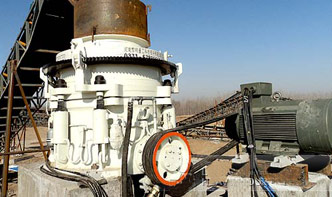
Crushed stone is produced by mechanically breaking down rocks into various sizes, typically using jaw crushers, cone crushers, or impact crushers. Crusher run, specifically, is a dense-grade aggregate (DGA) that combines coarse aggregates (typically ¾-inch or smaller) with stone fines. Its self-binding nature allows for superior compaction, reducing settling over time.
The conversion from tonnes to m³ for crusher run depends on its bulk density, which typically ranges between 1.4 to 1.7 tonnes per cubic meter. Factors influencing density include:
A general formula is:
\[ \text{Volume (m³)} = \frac{\text{Weight (tonnes)}}{\text{Bulk Density (tonnes/m³)}} \]
For example, 5 tonnes of crusher run with a density of 1.6 t/m³ would occupy:
\[ \frac{5}{1.6} = 3.125 \, \text{m³} \]
1. Why does crusher run vary in density?
Mineral composition, gradation, and compaction influence density. Limestone crusher run is often less dense than granite.
2. How much crusher run is needed per square meter?
For a 50mm layer, approximately 0.05 m³ per m² is required. Adjust based on depth.
3. run be used for concrete mix?
No—its fines content is too high. Clean, washed aggregates are preferred for concrete.
A recent highway expansion project utilized 12,000 tonnes of limestone crusher run for the sub-base. With a bulk density of 1.55 t/m³, the material covered 7,742 m³, ensuring a stable foundation despite heavy rainfall.
From small residential projects to large-scale infrastructure, crusher run remains indispensable. Proper conversion from tonnes to m³ ensures precise ordering, minimizing waste and cost overruns. As sustainability gains traction, recycled aggregates are emerging, but crusher run’s reliability keeps it a cornerstone of construction.
(Note: For site-specific calculations, always verify material density with local suppliers.)

