Chromium Beneficiation Processing and Its Role in the Aggregate Industry
The mining and aggregate industry plays a critical role in infrastructure development, with chromium being one of the essential elements used in alloys, refractories, and chemicals. Chromium beneficiation involves processes like crushing, grinding, gravity separation, and magnetic separation to upgrade low-grade ores into marketable concentrates. This aligns closely with the broader sand and aggregate sector, where crushing and screening equipment is vital for producing high-quality construction materials.
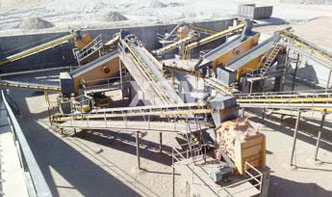
Chromium ore typically exists as chromite (FeCr₂O₄), requiring physical or chemical processing to remove impurities. Similarly, sand and gravel operations rely on crushing machinery (e.g., jaw crushers, cone crushers) to break down raw materials into uniform sizes for concrete, asphalt, and road bases. Both industries emphasize efficiency, environmental compliance, and cost optimization.
1. Crushing Systems: Primary crushers (jaw/gyratory) reduce large chromite or rock chunks; secondary/tertiary crushers refine particle size.
2. Screening & Classification: Vibrating screens separate chromite grains or aggregate fractions (e.g., 0–5mm sand vs. 20–40mm gravel).
3. Gravity Separation: Spiral concentrators or jigs recover dense chromite; analogous to sand washing plants removing silt/clay.
4. Magnetic Separation: Used for iron removal from chromite; similar to ferrous metal extraction in recycled concrete aggregates.

Q: How does chromite processing compare to limestone crushing?
A: Both involve size reduction but differ in downstream methods—chromite requires density/magnetic separation, while limestone focuses on gradation control for construction specs.
Q: Can aggregate crushers handle chromite ore?
A: Yes, but abrasion-resistant linings are crucial due to chromite’s hardness (~5.5 Mohs). High-grade steel or ceramic liners extend equipment life.
A South African chromite mine deployed a three-stage crushing circuit (jaw → cone → VSI) followed by log washers to achieve 98% Cr₂O₃ recovery. Parallelly, a Texas quarry used identical cone crushers to produce ASTM-certified aggregates for highway projects, highlighting equipment versatility across minerals.
Chromium beneficiation shares synergies with aggregate processing—both demand robust machinery tailored to material characteristics. Innovations like automated sorting and dry processing are shaping both fields toward sustainability and higher yields.

