The Screw Conveyor in Aggregate Processing: Design and Calculation
The screw conveyor, a cornerstone of bulk material handling in the aggregate and sand processing industry, efficiently transports crushed rock, sand, and other granular materials. Its design hinges on precise calculations to ensure optimal performance in demanding environments like quarries and recycling plants.
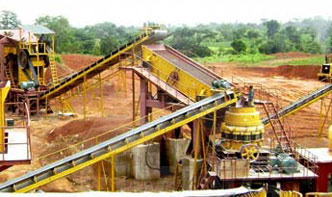
Aggregate processing demands robust equipment to handle abrasive materials. Screw conveyors are favored for their versatility in feeding crushers, sorting screens, or stockpiling finished products. Their enclosed design minimizes dust—a critical factor in compliance with environmental regulations.
1. Capacity (Q)
Calculated as:
\[
Q = 47.1 \times D^2 \times s \times n \times \psi \times \rho
\]
Where:
– \(D\) = Screw diameter (m)
– \(s\) = Pitch (usually 0.8–1.0 × \(D\))
– \(n\) = RPM
– \(\psi\) = Filling factor (30–45% for aggregates)
– \(\rho\) = Material density (t/m³)
2. Power Requirements
\[
P = \frac{Q \times L \times g \times f}{367}
\]
– \(L\) = Conveyor length (m)
– \(f\) = Friction coefficient (1.2–4.0 for abrasive materials)
3. Critical Speed
Exceeding the critical RPM causes material agitation, reducing efficiency:
\[
N_{crit} = \frac{4.76}{\sqrt{D}}
\]
A: Use hardened flights or replaceable liners; limit speed to <60% of \(N_{crit}\).
A: Typically 20°–30°; steeper angles require tubular or shaftless designs.
A Texas-based plant upgraded its screw conveyor to handle 150 tph of crushed limestone (\(D\) = 0.5 m, \(L\) = 12 m). By optimizing pitch (0.9 × \(D\)) and RPM (45), power consumption dropped by 18%, while wear life extended via tungsten carbide flights.
Accurate screw conveyor calculations ensure reliability in aggregate operations—balancing capacity, wear resistance, and energy efficiency remains key for sustainable production.

