Copper Leaching Production Line and Its Connection to the Aggregate Industry
The mining and aggregate industries share a common foundation: the extraction and processing of raw materials. While copper leaching focuses on metal recovery, the technologies involved—such as crushing, grinding, and material handling—overlap significantly with sand and gravel production. This article explores the synergies between these sectors, emphasizing equipment innovation and practical applications.
Copper leaching is a hydrometallurgical process that extracts copper from low-grade ores using chemical solutions. The production line typically includes:
1. Primary Crushing: Jaw or gyratory crushers reduce large ore chunks.
2. Secondary Grinding: Ball mills or HPGRs (High-Pressure Grinding Rolls) refine the material for optimal leaching efficiency.
3. Leaching Pads/Agitation Tanks: Chemical solvents separate copper from ore.
4. Solid-Liquid Separation: Thickeners or filters recover copper-rich solutions.
In parallel, the aggregate industry relies on similar crushing and screening stages to produce sand, gravel, and crushed stone for construction. Equipment like cone crushers, VSI (Vertical Shaft Impactors), and vibrating screens are critical in both fields.
1. Crushers:
– Jaw Crushers: Used in primary crushing for both copper ore and hard rock aggregates.
– Cone Crushers: Ideal for secondary/tertiary crushing in high-abrasion environments (e.g., basalt or granite).
2. Grinding Mills:
– Ball mills serve dual purposes—fine grinding for leaching circuits and producing manufactured sand (M-sand).
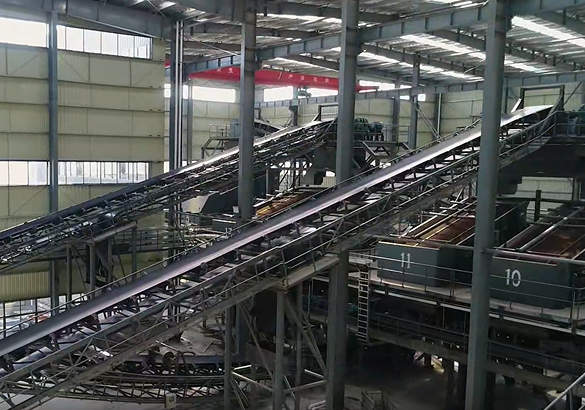
3. Screening & Classification:
– High-frequency screens ensure precise particle sizing, whether for leach feed or aggregate gradation requirements.
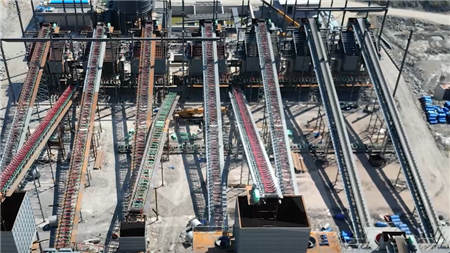
Q1: Can aggregate crushers be repurposed for copper ore processing?
Yes, but wear parts (e.g., manganese liners) may need upgrading due to ore abrasiveness.
Q2: How does HPGR technology benefit both industries?
HPGRs improve energy efficiency by reducing overgrinding in leaching circuits and enhancing cubical particle shape in aggregates.
Q3: What are the dust control measures?
Wet suppression systems or bag filters are standard in crushing plants to meet environmental regulations.
A Chilean copper mine integrated an aggregate-style VSI crusher into its leaching circuit to crush oxide ore to 6mm, improving solvent penetration by 20%. Meanwhile, a Malaysian quarry adopted a copper-leaching thickener design to recycle water in its sand-washing plant, cutting freshwater consumption by 30%.
The convergence of copper leaching and aggregate technologies highlights the versatility of crushing/grinding equipment. Innovations in one sector often translate to cross-industry benefits, driving efficiency and sustainability in mineral and construction material production.

