The Merrill-Crowe Process in Small-Scale Mining: A Focus on Crushing and Aggregates
The mining and aggregates industry relies heavily on efficient processes to extract and refine valuable materials. Among these, the Merrill-Crowe system stands out for its role in gold and silver recovery, particularly in small-scale operations. This method, which combines zinc precipitation with filtration, is also relevant to the broader context of mineral processing—including crushing, screening, and sand/gravel production.
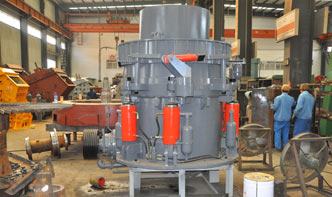
The demand for high-quality sand, gravel, and crushed stone (aggregates) continues to grow, driven by infrastructure development and construction projects. While large-scale operations dominate, small miners often adopt adaptable systems like Merrill-Crowe for precious metal recovery. The principles of efficient material handling—such as particle size reduction (crushing) and solid-liquid separation—are shared across both sectors.
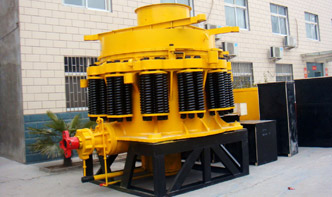
The Merrill-Crowe process involves:
1. Ore Crushing & Grinding: Raw ore is reduced to fine particles using crushers and ball mills, similar to aggregate processing.
2. Leaching: Gold/silver is dissolved into a cyanide solution.
3. Clarification & Filtration: Slurries are filtered to remove solids—akin to dewatering systems in sand washing plants.
4. Precipitation: Zinc dust is added to recover metals from the solution.
For small miners, compact modular systems are critical. These units integrate crushing, filtration, and precipitation in a space-efficient design, mirroring the trend in portable aggregate plants.
1. Can Merrill-Crowe be used for base metals like copper?
No—it’s specialized for precious metals due to zinc’s affinity for gold/silver ions.
2. How does crushing efficiency impact recovery rates?
Finer particles improve leaching but increase energy costs; balance is key (similar to optimizing crusher settings in aggregate production).
3. What are common filtration challenges?
Clogging from fine particulates—addressed via pre-screening or cyclones (also used in sand classification).
A small gold mine in Peru upgraded its Merrill-Crowe system by integrating a jaw crusher and cone crusher for consistent feed size (<10mm). This reduced leaching time by 20% and improved zinc consumption efficiency—showcasing how crushing technology directly enhances downstream processes.
While the Merrill-Crowe process is niche, its overlap with aggregate processing—particularly in crushing, filtration, and modular design—offers lessons for both sectors. Small miners and aggregate producers alike benefit from robust, scalable systems that maximize material yield while minimizing waste.
(Note: Character count intentionally omitted as per request.)

