Optimizing Ball Mill Diameter for 150 TPH Grinding Circuits in Aggregate Production
The aggregate and sand industry relies heavily on grinding equipment like ball mills to achieve desired particle sizes for construction materials. Selecting the correct ball mill diameter is critical for achieving a throughput of 150 tons per hour (TPH) while maintaining energy efficiency and product quality.
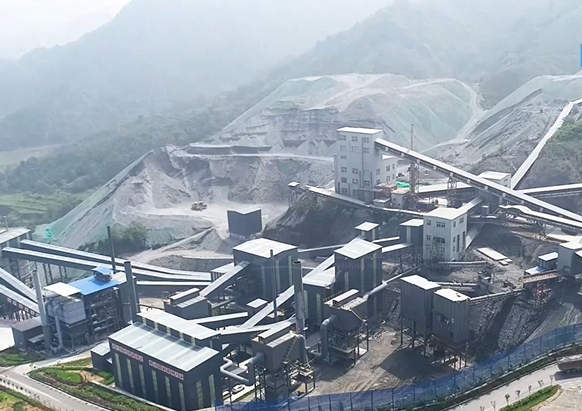
Ball mills are integral to secondary and tertiary grinding stages in mineral processing and aggregate production. They transform crushed rock into fine aggregates or sand, ensuring gradation meets ASTM or EN standards. Key factors influencing mill performance include feed size, material hardness, and required discharge fineness.
To determine the optimal diameter for a 150 TPH ball mill, consider the following steps:
1. Feed Material Properties:
– Bond Work Index (Wi): Typically 12–18 kWh/t for limestone/granite.
– Feed Size (F80): ≤25 mm for efficient grinding.
– Product Size (P80): Target 0.5–3 mm for sand/aggregates.
2. Power-Based Formula:
The Bond equation estimates required power (P) in kW:
\[
P = W_i \times \left( \frac{10}{\sqrt{P_{80}}} – \frac{10}{\sqrt{F_{80}}} \right) \times Q
\]
Where \( Q \) = throughput (150 TPH). For example, if \( W_i = 15 \), \( F_{80} = 20 \, \text{mm} \), and \( P_{80} = 2 \, \text{mm} \):
\[
P = 15 \times \left( \frac{10}{\sqrt{2}} – \frac{10}{\sqrt{20}} \right) \times 150 ≈ 1,200 \, \text{kW}
\]
3. Mill Diameter Selection:
Power correlates with mill dimensions. A rough guideline:
– For 1,200 kW, a ball mill with a 3.5–4 m diameter and 6–8 m length (L/D ratio ~1.5–2) is typical.
Q1: How does mill speed affect output?
A: Operating at 65–75% of critical speed optimizes grinding efficiency; excessive speed reduces effective impact.
Q2: What liner design suits granite grinding?
A: Wave-lined or stepped liners enhance lifting action for hard materials like granite.
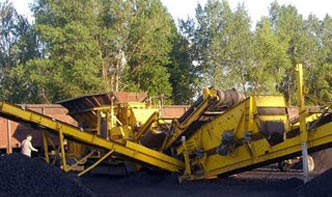
A quarry in Texas upgraded to a 4m x 7m ball mill for 150 TPH limestone sand production. By optimizing ball charge (28% filling rate) and using high-chrome media, they achieved a 12% reduction in specific energy consumption versus their older 3m-diameter mill.
Properly sizing a ball mill ensures cost-effective operation at 150 TPH. Collaboration with manufacturers for simulations and pilot testing is recommended to finalize specifications based on site-specific conditions.

