Agitated Ball Mill Calculation and Its Role in the Aggregate Industry
The aggregate industry relies heavily on efficient grinding and crushing equipment to produce high-quality sand and stone materials. Among various grinding technologies, the agitated ball mill stands out for its precision and energy efficiency, particularly in fine and ultra-fine grinding applications.
The demand for finely ground materials has grown significantly, driven by construction, mining, and infrastructure projects. Agitated ball mills are widely used to process hard and abrasive materials, such as quartz, feldspar, and limestone, into fine powders or uniform aggregates. Unlike traditional ball mills, agitated mills use a stirrer to create intense grinding action, reducing energy consumption while improving particle size distribution.
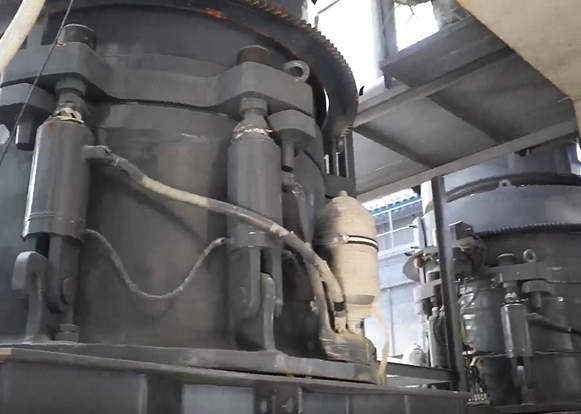
Key parameters in agitated ball mill design and operation include:
1. Grinding Media Size & Density – Affects impact energy and milling efficiency.
2. Stirrer Speed (RPM) – Determines shear forces and particle breakage rate.
3. Slurry Density & Viscosity – Influences material flow and grinding kinetics.
4. Power Consumption – Must be optimized to balance cost and performance.
Calculations often involve:
Q: How does an agitated mill differ from a conventional ball mill?
A: Agitated mills use mechanical stirrers instead of rotational drum motion, enabling finer grinding at lower energy costs.
Q: What maintenance is required?
A: Regular inspection of wear parts (stirrer discs, liners) and lubrication is critical due to high-speed agitation.
Q: Can it handle wet grinding?
A: Yes, wet grinding is common, especially for mineral processing where slurry transport is needed.
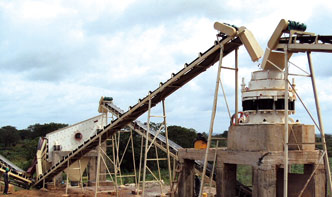
A quarry in Germany upgraded its limestone processing line with an agitated ball mill to achieve a D90 of 20 microns (from 100 microns). By optimizing stirrer speed (1200 RPM) and media size (1-2mm ZrO₂), they reduced energy consumption by 30% compared to traditional milling methods.
Agitated ball mills offer superior efficiency in fine grinding applications within the aggregate sector. Proper calculation of operational parameters ensures cost-effective production while meeting stringent quality standards for sand and mineral powders. As technology advances, these mills will continue playing a pivotal role in sustainable material processing solutions worldwide.

