Can a Ball Mill Grind to Nanosize? Exploring the Limits of Grinding Technology in the Aggregate Industry
The aggregate and sand-making industry relies heavily on grinding and crushing equipment to produce materials of various sizes, from coarse aggregates to fine powders. Among these machines, ball mills are widely used for their versatility and efficiency. But can a ball mill achieve nanosize grinding? Let’s delve into the technical aspects and industry applications.
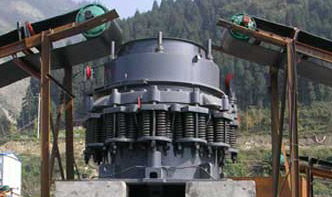
Ball mills have been a staple in mineral processing, cement production, and aggregate grinding for decades. They operate by rotating a cylinder filled with grinding media (typically steel balls), which crushes and grinds feed material through impact and attrition. While they excel at producing fine to ultra-fine powders (down to microns), achieving true nanosize particles (sub-100 nm) presents significant challenges.
1. Energy Efficiency: Nanogrinding requires extreme mechanical forces or prolonged milling times, leading to high energy consumption—often impractical for industrial-scale production.
2. Media Contamination: Prolonged grinding increases wear on milling media, risking contamination of the final product with eroded material (e.g., iron from steel balls).
3. Particle Agglomeration: At nanoscales, particles tend to reagglomerate due to van der Waals forces, countering further size reduction.
While traditional ball mills struggle with nanosizing, advanced technologies like:
Q: Can industrial ball mills produce nanoparticles?
A: Generally no—most commercial ball mills max out at micron-level fineness (~10–50 µm). Achieving nanoparticles requires specialized equipment or chemical methods.
Q: What’s the finest output achievable with a standard ball mill?
A: With optimized parameters (e.g., extended time, smaller media), some models reach 1–10 µm, but consistency is challenging.
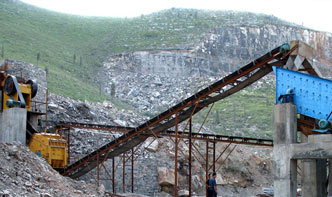
A mining company attempted nano-grinding silica sand using a modified ball mill but faced excessive wear and inconsistent results. Switching to a stirred media mill improved fineness (~500 nm) but required downstream classification to isolate true nanoparticles—highlighting the trade-offs in cost vs. precision.
While ball mills remain indispensable for coarse-to-fine grinding in aggregates, nanosizing demands alternative technologies or hybrid approaches. For most industrial applications targeting microns rather than nanometers, optimizing existing ball mill systems proves more practical than chasing extreme fineness. The industry continues to innovate, but scalability and cost remain key hurdles in nano-material production via mechanical grinding alone.

