Calcium Carbonate Grinding Equipment: Key Solutions for the Aggregate Industry
The global demand for high-quality calcium carbonate (CaCO3) continues to rise, driven by its extensive applications in construction, paper, plastics, and coatings. In the aggregate industry, finely ground calcium carbonate serves as a critical raw material for producing durable concrete, asphalt mixtures, and other building materials. To meet stringent quality standards, efficient grinding equipment is essential for processing limestone and other CaCO3-rich minerals into precise particle sizes.
Calcium carbonate exists in two primary forms: ground (GCC) and precipitated (PCC). GCC, derived from natural limestone or marble, dominates the construction sector due to its cost-effectiveness and versatility. The grinding process significantly impacts product performance—fine particles enhance strength and workability in cementitious applications, while coarser grades are ideal for road base materials.
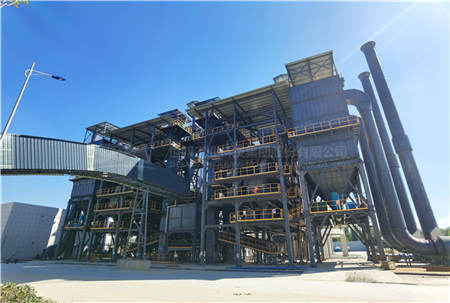
Modern grinding systems leverage advanced machinery to optimize efficiency and output:
1. Raymond Mill: Ideal for coarse to medium-fine grinding (80–400 mesh), offering low energy consumption and easy maintenance.
2. Ball Mill: Suited for wet or dry grinding to achieve ultra-fine particles (<10 μm), commonly used in large-scale industrial production.
3. Vertical Roller Mill (VRM): Combines grinding, drying, and classification in one unit, reducing energy use by 30–50% compared to traditional mills.
4. Ultra-Fine Grinding Mills: Jet mills or stirred media mills produce sub-micron particles for specialty applications like high-performance fillers.
Key considerations when selecting equipment include feed size, moisture content, desired fineness, and production capacity. Closed-circuit systems with classifiers improve consistency by recycling oversized particles.
Q1: What’s the typical energy consumption for CaCO3 grinding?
A: Depending on fineness, energy usage ranges from 30 kWh/t (coarse GCC) to 150 kWh/t (ultra-fine PCC). VRMs offer notable savings over ball mills.
Q2: How to mitigate wear in grinding components?
A: Use high-chrome or ceramic liners paired with regular maintenance schedules. Abrasive impurities like silica should be minimized in feedstock.
Q3: Can one mill handle multiple grades of CaCO3?
A: Yes, adjustable classifiers or modular designs allow quick transitions between products by altering rotor speed or airflow settings.
A Spanish construction materials producer upgraded to a vertical roller mill for GCC production (~325 mesh). The project achieved:
This retrofit underscores how modern grinding technology enhances sustainability while meeting tight particle distribution specs demanded by concrete manufacturers worldwide.
For operators prioritizing cost-efficiency and precision automation remains pivotal integrating IoT-enabled monitoring further refines process control ensuring long-term competitiveness in evolving markets where material performance is non-negotiable

