Phosphate Rock Beneficiation and Its Role in the Aggregate Industry
The beneficiation of phosphate rock is a critical process in the production of fertilizers and industrial chemicals. However, the technologies and equipment used in this process share similarities with those employed in the aggregate and sand-making industries, particularly in crushing, screening, and classification.
Phosphate rock beneficiation involves removing impurities to increase the concentration of phosphorus pentoxide (P₂O₅). The process typically includes crushing, grinding, washing, flotation, and drying—stages that overlap with aggregate processing for construction materials like sand, gravel, and crushed stone. Both industries rely on robust machinery to handle abrasive materials efficiently.
1. Crushing Equipment:
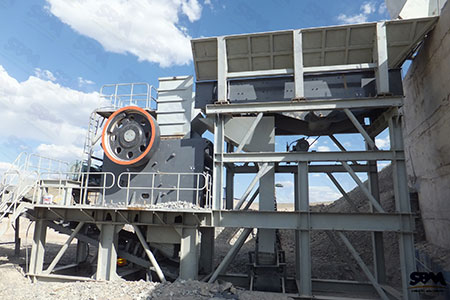
– Primary crushers (jaw crushers) reduce large phosphate rocks or quarry stones into manageable sizes.
– Secondary crushers (cone crushers or impact crushers) further refine the material for downstream processes.
2. Screening & Classification:
– Vibrating screens separate particles by size, ensuring uniformity—a step vital for both phosphate concentrates and graded aggregates.
– Hydrocyclones or spiral classifiers are used in wet beneficiation and sand washing applications.
3. Grinding Mills:
– Ball mills or rod mills grind phosphate rock or aggregate feed to liberate minerals or achieve desired fineness for concrete sand.
4. Flotation & Washing Systems:
– In phosphate beneficiation, flotation cells separate silica and other gangue minerals. Similarly, log washers and attrition scrubbers clean aggregates to remove clay and organic matter.
A: Yes, with modifications like corrosion-resistant linings and flotation modules, some equipment is cross-compatible.
A: Wear-resistant components (e.g., high-chrome blow bars) are essential to extend machinery lifespan in both industries.
A project in Florida combined phosphate beneficiation with sand recovery for construction use. By integrating a closed-loop water system and dual-stage screening, the plant produced high-grade phosphate concentrate while supplying washed sand to local infrastructure projects—demonstrating resource efficiency across sectors.
The overlap between phosphate beneficiation and aggregate processing highlights the versatility of crushing and screening technologies. Innovations developed for one industry often benefit the other, driving advancements in efficiency and sustainability across mineral extraction and construction material production.

