Flow Process Ball Mill for Iron Ore Processing in the Aggregates Industry
The aggregates and sand production industry relies heavily on efficient grinding equipment to process raw materials like iron ore into fine particles suitable for construction and industrial applications. Among the key machines used, the ball mill stands out for its ability to grind and blend materials consistently.
Iron ore is a critical raw material for steel production, but it also finds applications in cement and concrete manufacturing when finely ground. The demand for high-quality sand and aggregates has driven innovations in grinding technology, with ball mills playing a pivotal role in achieving uniform particle size distribution.
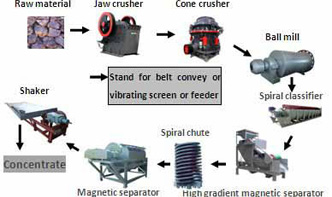
1. Grinding Mechanism: A ball mill uses steel balls as grinding media to crush iron ore into fine powder through impact and attrition. The flow process ensures continuous feeding and discharge, optimizing productivity.
2. Adaptability: Suitable for both wet and dry grinding, ball mills can handle various ore hardness levels, making them versatile for different mining conditions.
3. Energy Efficiency: Modern designs incorporate advanced motor systems and liners to reduce energy consumption while maintaining output quality.
4. Automation Integration: Automated control systems monitor parameters like feed rate, rotation speed, and particle size, ensuring consistent performance with minimal manual intervention.
Typically, balls ranging from 30mm to 100mm are used, depending on the ore’s hardness and desired fineness.
Flow process ball mills operate continuously, reducing downtime and improving efficiency compared to batch systems.
Regular inspection of liners, lubrication of bearings, and monitoring of motor performance are essential.
A mining operation in Australia upgraded to a flow process ball mill for iron ore processing, achieving a 20% increase in throughput while reducing energy use by 15%. The system’s automated controls allowed real-time adjustments, minimizing waste and downtime.
Flow process ball mills are indispensable in the aggregates sector for iron ore grinding due to their efficiency, adaptability, and automation capabilities. As demand grows for high-quality sand and construction materials, advancements in milling technology will continue to shape the industry’s future.

