The Growing Demand and Cost Considerations of Artificial Rock Sand Making Machineries
The global construction industry heavily relies on high-quality sand and aggregates, with natural sand reserves depleting rapidly due to over-exploitation. This has spurred the demand for artificial rock sand-making machineries, which produce manufactured sand (M-Sand) by crushing hard rocks into fine, graded particles. These machines are pivotal in ensuring sustainable construction practices while meeting stringent quality standards.
Natural sand mining poses environmental challenges, including riverbed degradation and groundwater depletion. Governments worldwide are enforcing stricter regulations, pushing contractors toward artificial alternatives. M-Sand, produced using vertical shaft impactors (VSI), cone crushers, or jaw crushers, offers superior consistency, better particle shape, and reduced silt content compared to natural sand.
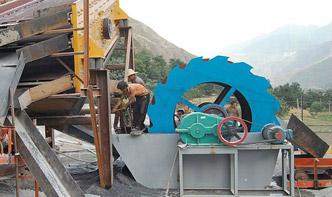
The cost of artificial sand-making equipment varies based on capacity, technology, and automation levels:
1. Vertical Shaft Impactor (VSI) – Ideal for producing cubical-shaped sand; costs range from $50,000 to $300,000 depending on output (30–500 TPH).
2. Cone Crusher – Suitable for secondary crushing; priced between $100,000 and $600,000 for high-capacity models.
3. Jaw Crusher – Used primarily for primary crushing; costs start at $30,000 for smaller units.
Additional expenses include auxiliary equipment (vibrating screens, feeders) and operational costs (power consumption, wear parts like liners and rotors). Investing in energy-efficient models or hybrid systems can reduce long-term expenses.
1. What is the typical payback period?
– With steady demand, ROI is achievable within 1–3 years due to high market value of M-Sand.
2. How does artificial sand compare to natural sand?
– M-Sand has better compressive strength and eliminates impurities like clay or shells.
3. What maintenance is required?
– Regular inspection of wear parts and lubrication systems minimizes downtime.
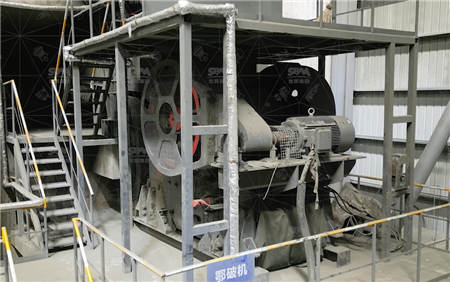
A quarry in Texas replaced its natural sand extraction with a VSI-based plant producing 200 TPH of M-Sand. The $1.2M investment included a three-stage crushing setup (jaw + cone + VSI) and achieved full ROI in 22 months by supplying local concrete batching plants.
Artificial rock sand-making machineries offer a sustainable solution amid tightening environmental norms. While initial costs are significant, long-term benefits—such as consistent quality and compliance—make them indispensable for modern construction projects. Selecting the right equipment tailored to material hardness and production goals ensures optimal efficiency and profitability.

