Crushing Limestone in Cement Plants: A Comprehensive Guide
The cement industry relies heavily on limestone as a primary raw material, accounting for up to 80% of the clinker composition. Efficient limestone crushing is critical to ensuring optimal cement production, energy efficiency, and product quality. This article explores the process, equipment, and best practices for crushing limestone in cement plants.
Limestone is a sedimentary rock rich in calcium carbonate (CaCO₃), essential for clinker formation. In cement manufacturing, limestone must be crushed to a fine powder (typically <90 μm) to facilitate calcination in the kiln. The crushing process involves multiple stages:
1. Primary Crushing: Large limestone rocks (up to 1.5m) are reduced to ~200mm using jaw crushers or gyratory crushers.
2. Secondary Crushing: Cone crushers or impact crushers further reduce the material to ~50mm.
3. Tertiary Crushing & Grinding: Hammer mills or vertical shaft impactors (VSIs) produce finer particles before ball mills or roller presses achieve the final powder.
1. Abrasion Wear: Limestone’s abrasive nature accelerates equipment wear. Solution: Use wear-resistant liners and regular maintenance.
2. Moisture Content: Wet limestone can clog crushers. Solution: Pre-drying or selecting impact crushers with grinding paths.
3. Dust Control: Crushing generates dust, posing health and environmental risks. Solution: Install dust suppression systems (e.g., water sprays or bag filters).
Q1: What is the ideal limestone size after primary crushing?
A: Typically ≤200mm for efficient secondary processing.
Q2: Can vertical shaft impactors (VSIs) replace hammer crushers?
A: Yes, VSIs offer better particle shape but may have higher operational costs for abrasive materials.
Q3: How to minimize energy consumption in limestone grinding?
A: Adopt roller presses or hybrid grinding systems (e.g., ball mill + pre-crusher).
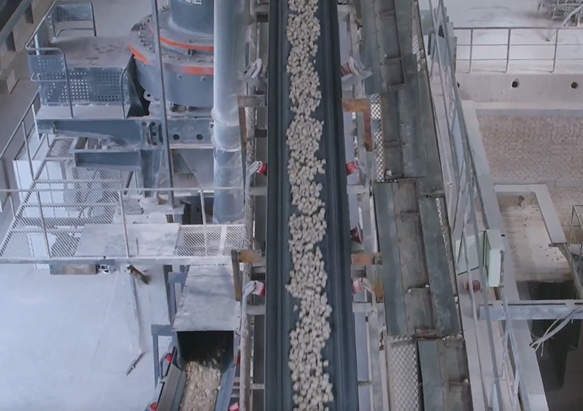
A cement plant in Turkey upgraded its limestone crushing circuit by replacing traditional jaw crushers with a single-stage hammer crusher, reducing energy consumption by 25% and increasing throughput by 30%. Dust control was improved with an enclosed conveyor system and bag filters, ensuring compliance with environmental standards.
Optimizing limestone crushing in cement plants requires selecting the right equipment, addressing operational challenges, and adopting energy-efficient technologies. By integrating advanced crushers and dust control measures, plants can enhance productivity while meeting sustainability goals.