The Evolving Landscape of Crushing and Sand-Making Equipment in the Aggregates Industry
The global construction boom has intensified demand for high-quality sand and aggregates, driving innovation in crushing and sand-making equipment. As urbanization accelerates, the aggregates industry faces dual challenges: meeting stringent environmental regulations while optimizing production efficiency.
Core Technologies Shaping the Sector
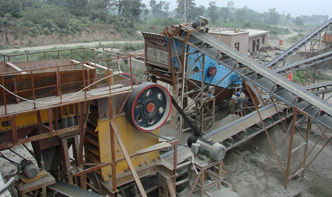
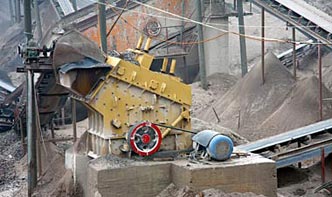
Modern crushing systems prioritize energy efficiency and particle shape control. Jaw crushers remain foundational for primary crushing, while cone crushers excel in secondary stages with their ability to produce cubical aggregates. The rise of vertical shaft impact (VSI) crushers has revolutionized sand production, enabling precise gradation adjustments crucial for concrete mixes.
Key advancements include:
Frequently Encountered Challenges (FAQ)
Q: How to balance production capacity with final product quality?
A: Implement multi-stage screening with feedback loops—recycling oversize material through tertiary crushers often yields better shape than aggressive primary crushing.
Q: Dust suppression solutions for arid regions?
A: High-pressure mist systems coupled with enclosed transfer points can reduce airborne particulates below 10mg/m³ without water-intensive methods.
Engineering Case Highlight
A Malaysian granite quarry achieved 240TPH of ASTM C33-compliant sand by retrofitting a VSI crusher with a cascading rotor system. The solution reduced flaky particles by 18% while maintaining <3% moisture content—critical for ready-mix concrete applications. The project paid back within 14 months through reduced waste and premium product pricing.
As ESG considerations reshape procurement criteria, equipment manufacturers are responding with lifecycle analysis tools that quantify carbon footprints per ton of output—a paradigm shift from pure cost-per-ton metrics. The next frontier lies in AI-driven predictive maintenance, where vibration pattern recognition could extend bearing lifecycles by 40%.
This technological evolution positions crushing systems not just as material processors, but as strategic assets for sustainable construction growth.

