Converting Cubic Meters of Aggregate to Tons: A Guide for the Aggregate Industry
The aggregate industry plays a critical role in construction, providing essential materials like crushed stone, sand, and gravel for infrastructure projects. One common challenge faced by professionals is converting the volume of aggregates (measured in cubic meters) to weight (measured in tons). This conversion is vital for logistics, pricing, and project planning.
The key to accurate conversion lies in knowing the bulk density of the aggregate material. Bulk density varies depending on the type of aggregate and its compaction level. For example:
To convert cubic meters to tons, use the formula:
Weight (tons) = Volume (m³) × Bulk Density (tons/m³)
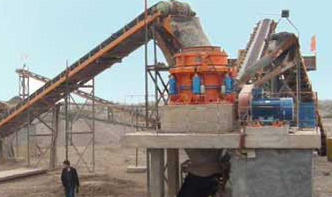
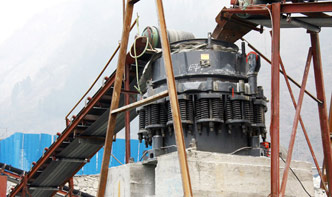
Modern crushing and screening equipment ensures consistent aggregate sizing and density, directly impacting bulk density calculations. Advanced machinery like jaw crushers, cone crushers, and VSI (Vertical Shaft Impactors) optimize particle shape and gradation, influencing how aggregates settle and their final weight per unit volume.
1. Why does bulk density vary?
Factors include moisture content, particle size distribution, and compaction during transportation or storage.
2. How can I measure bulk density accurately?
Conduct field tests by weighing a known volume of aggregate or refer to supplier specifications.
3. Does crushed aggregate weigh more than natural gravel?
Often yes—crushed stone tends to have higher density due to angular particles packing more tightly.
A highway construction project required 10,000 m³ of crushed limestone with a bulk density of 1.6 t/m³. Using the formula:
10,000 m³ × 1.6 t/m³ = 16,000 tons. Accurate conversion ensured precise trucking schedules and cost estimates, avoiding overordering or delays.
Understanding aggregate conversions ensures efficiency in procurement and operations—especially when paired with reliable crushing equipment that delivers uniform material properties.For large-scale projects,collaborating with experienced suppliers minimizes discrepancies in volume-to-weight calculations while optimizing production workflows。

