The Role of Cone Crushers in Processing Calcium Carbonate for the Aggregates Industry
Industry Background
The aggregates and sand-making industry relies heavily on efficient crushing equipment to process raw materials like limestone, granite, and calcium carbonate (CaCO₃). Calcium carbonate, a key component in construction, agriculture, and industrial applications, demands precise crushing to achieve desired particle sizes. Cone crushers have emerged as a preferred solution due to their ability to deliver consistent output with low operational costs.
Core Advantages of Cone Crushers for Calcium Carbonate
1. High Reduction Ratio: Cone crushers excel in secondary and tertiary crushing, reducing large chunks of calcium carbonate into fine aggregates (0-5mm) or even ultrafine powders (<100µm) for specialized applications.
2. Low Wear Costs: Advanced liner materials (e.g., manganese steel) minimize wear when processing abrasive CaCO₃, extending equipment lifespan.
3. Adjustable Output: Hydraulic systems allow real-time adjustment of discharge settings, catering to varying product requirements without downtime.
4. Dust Control: Integrated sealing systems reduce dust emission—a critical feature for CaCO₃ processing, where airborne particles pose health and environmental risks.
Common FAQs
A: While cone crushers are designed for dry crushing, models with corrosion-resistant components can tolerate moderate moisture. For slurry-like material, consider a hammer mill or roller crusher.
A: Mid-sized cone crushers process 50–500 TPH, depending on feed size and hardness (Mohs scale 3 for CaCO₃).
A: Pre-screening (<30mm feed) and ensuring uniform moisture (<5%) prevent clogging in the crushing chamber.
Engineering Case Study
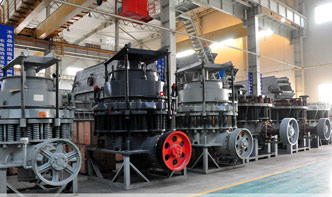
A Spanish aggregates producer upgraded to a hydraulic cone crusher for CaCO₃ processing, achieving:
Conclusion
Cone crushers offer a balanced solution for calcium carbonate processing, combining precision, durability, and adaptability. As demand for high-purity CaCO₃ grows in sectors like plastics and pharmaceuticals, optimizing crushing technology remains pivotal for industry stakeholders.

