Maximizing Cone Crusher Utilization: A Guide to Capacity Calculation
The aggregate and sand production industry relies heavily on efficient crushing equipment to meet growing demands for construction materials. Among key machines, cone crushers play a pivotal role in secondary and tertiary crushing stages, offering high reduction ratios and consistent particle shape. Understanding how to calculate and optimize their utilization capacity is critical for operational efficiency.
Global infrastructure development drives the demand for high-quality aggregates. Cone crushers are preferred for hard and abrasive materials like granite, basalt, and quartz due to their robust design and ability to produce finely graded outputs. Proper capacity calculation ensures minimal downtime, reduced wear costs, and higher profitability.
1. Feed Material Properties
– Hardness, moisture content, and feed size distribution impact throughput.
– Stickier materials may cause choking, reducing effective capacity.
2. Crusher Design Parameters
– Closed-side setting (CSS): A smaller CSS increases fines but lowers throughput.
– Eccentric throw: Higher throw enhances capacity but may affect product gradation.
3. Operational Conditions
– Proper feed arrangement (e.g., choke-fed vs. regulated feed).
– Power draw limitations: Overloading risks premature wear or motor failure.
Theoretical capacity (Q) can be estimated using:
\[ Q = \text{(A × B × C)} / \text{D} \]
Where:
For example, a cone crusher rated at 300 t/h processing dry granite (~1.6 t/m³) with optimal feed may achieve ~270 t/h after adjustments (Q = 300 × 1 × 0.9 / 1).
Q1: How does liner wear affect capacity?
A: Worn liners reduce crushing chamber volume, lowering output by up to 15%. Regular inspections are vital.
Q2: Can tramp iron damage impact calculations?
A: Yes—unexpected metal ingress disrupts settings; use metal detectors or relief systems proactively.
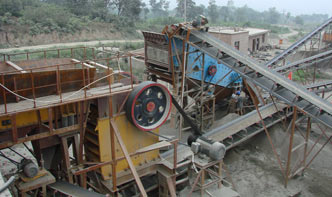
A quarry in Texas upgraded its CH870 cone crusher with automated CSS adjustment and real-time monitoring, achieving a 22% throughput increase while maintaining product consistency (±5% gradation variance). Key steps included:
Accurate cone crusher capacity calculation hinges on balancing material characteristics, machine settings, and operational practices—directly influencing ROI in aggregate production lines.

