Stamp Mills in Gold Mining: A Cornerstone of Ore Processing
The gold mining industry has long relied on robust and efficient crushing technologies to extract precious metals from ore. Among these, the stamp mill stands out as a historically significant and mechanically straightforward solution for pulverizing gold-bearing rock.
Stamp mills emerged in the 19th century during gold rushes, particularly in North America and Australia. These machines use heavy mechanical stamps to crush ore into fine particles, enabling gold liberation through subsequent processes like amalgamation or cyanidation. While modern mills have replaced traditional designs in large-scale operations, stamp mills remain relevant in artisanal and small-scale mining (ASM) due to their low cost and simplicity.
A typical stamp mill consists of:
Advantages include:
While traditional stamp mills are rare today, their principles endure in:
Q: Are stamp mills still used today?
A: Primarily in historical re-enactments or ASM; modern mines prefer high-efficiency crushers.
Q: What’s the typical output size?
A: ~20–50 mesh (0.3–0.8 mm), suitable for gravity separation or leaching.
Q: How does a stamp mill compare to a ball mill?
A: Stamp mills are cheaper but less efficient for ultrafine grinding; ball mills dominate industrial applications.
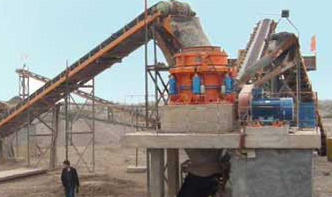
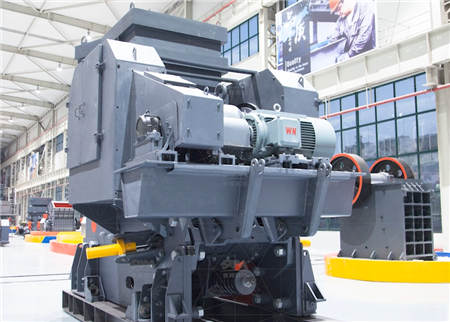
In Zimbabwe, small-scale miners revived stamp mills to process oxide ores, achieving 60–70% gold recovery via mercury amalgamation—despite environmental concerns. This highlights the trade-off between accessibility and sustainability in resource-limited settings.
Though eclipsed by advanced machinery, stamp mills symbolize the ingenuity of early mining engineering. Their legacy persists in regions where simplicity and low cost outweigh technological sophistication—a reminder that effective solutions often endure beyond their era.

