ASTM Ball Mill Work Index Standard: A Key Metric in Comminution and Aggregate Production
The ball mill work index (Wi) is a critical parameter in mineral processing and aggregate production, defined by ASTM D4082 and other related standards. It measures the energy required to grind a material to a specified fineness, serving as a benchmark for ore hardness and grindability. In the砂石骨料 (sand and gravel aggregates) industry, understanding Wi values helps optimize crushing and grinding circuits, reducing operational costs while improving product quality.
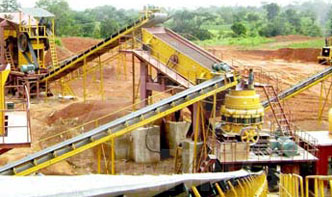
The demand for high-quality砂石骨料 has surged due to global infrastructure development. Efficient comminution—crushing and grinding—is essential to produce uniformly graded aggregates for concrete, asphalt, and road bases. The ball mill work index provides a standardized method to evaluate ore or rock hardness, guiding equipment selection and process design.
1. Test Methodology:
– Conducted using a laboratory ball mill under controlled conditions.
– Measures the energy (kWh/ton) needed to reduce feed material to 80% passing a specified sieve size (typically 100 µm).
2. Applications:
– Equipment Sizing: Helps select appropriate ball mills, crushers, or HPGRs (High-Pressure Grinding Rolls).
– Process Optimization: Adjusts grinding media, mill speed, and circuit design based on Wi values.
– Cost Estimation: Predicts power consumption for feasibility studies.
1. How does Wi differ from Bond Work Index?
The Bond Work Index is derived from the same principle but follows Bond’s methodology (ASTM D4373), whereas ASTM D4082 provides an alternative standard procedure with slight variations in test conditions.
2. Can Wi be used for all rock types?
Yes, but highly abrasive or sticky materials may require additional corrections or specialized tests like SAG Mill Comminution (SMC) testing.
3. How often should Wi testing be performed?
Regular testing is recommended when ore blends change significantly or process inefficiencies arise.
A granite quarry in Canada used ASTM Wi testing to optimize its grinding circuit:
The ASTM Ball Mill Work Index remains indispensable in砂石骨料 processing, bridging lab-scale data with industrial-scale efficiency. By leveraging this metric, producers enhance sustainability while meeting stringent aggregate specifications—proving that standardized testing fuels innovation in comminution technology.

