Separating Copper from Aluminum in Sand: Techniques and Applications in the Aggregates Industry
The aggregates industry plays a critical role in construction, mining, and recycling by processing raw materials like sand, gravel, and crushed stone. A common challenge in this sector is the separation of non-ferrous metals, such as copper and aluminum, from sand during recycling or mineral processing. Here’s a detailed look at methods, equipment, and practical considerations.
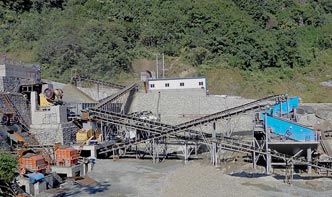
Sand and gravel often contain metallic impurities, especially in recycled construction waste or industrial byproducts. Copper and aluminum, due to their conductivity and lightweight properties, are frequently mixed in. Efficient separation ensures material purity and enhances the value of recycled products.
1. Eddy Current Separators
– Principle: Uses a rotating magnetic field to induce eddy currents in conductive metals (e.g., aluminum), repelling them from non-metals like sand.
– Application: Ideal for dry, granular materials; ineffective for non-conductive copper.
2. Electrostatic Separation
– Principle: Leverages differences in electrical conductivity. Copper (highly conductive) is attracted to electrodes, while aluminum and sand are separated by charge.
– Limitation: Requires finely ground materials and controlled humidity.
3. Density Separation (Sink-Float)
– Principle: Uses a dense medium (e.g., water or air fluidized bed) to separate lighter aluminum (2.7 g/cm³) and heavier copper (8.9 g/cm³) from sand (2.6 g/cm³).
– Equipment: Hydrocyclones or air tables.
4. Chemical Leaching (Less common)
– Principle: Selective dissolution of metals using acids or alkalis, followed by precipitation.
– Challenge: Environmental and cost concerns.
Q: Which method is most cost-effective for small-scale operations?
A: Eddy current separators are low-maintenance and suitable for dry processing.
Q: Can wet processing recover both copper and aluminum?
A: Yes, but density separation requires precise medium control.
Q: How fine must materials be for electrostatic separation?
A: Typically <10 mm, with moisture content below 5%.
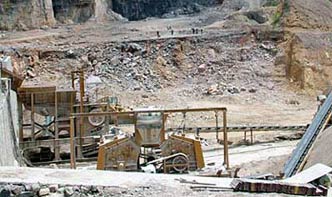
A European recycling plant combined eddy current and electrostatic systems to recover 95% of aluminum and 85% of copper from construction sand waste, increasing revenue by 20%.
Separation efficiency depends on material properties and scale. Integrating multiple techniques often yields the best results, aligning with the aggregates industry’s push toward sustainability and circular economy goals.

