Cone Crusher vs. HSI Crusher: A Comparative Analysis for Aggregate Production
The aggregate industry relies heavily on crushing equipment to produce high-quality sand and stone for construction, road building, and other infrastructure projects. Two of the most widely used machines are the cone crusher and the horizontal shaft impact (HSI) crusher. Each has distinct advantages and limitations, making them suitable for different applications.
Demand for crushed stone and manufactured sand has surged due to urbanization and infrastructure development. Selecting the right crusher is critical to optimizing production efficiency, product shape, and operational costs.
1. Crushing Mechanism
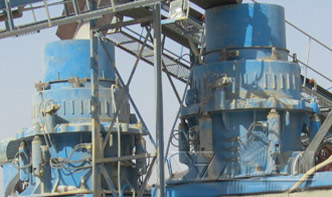
– Cone Crusher: Uses compression crushing with a rotating mantle against a concave liner. Ideal for hard, abrasive materials (e.g., granite, basalt). Produces well-shaped, cubical aggregates but may require closed-circuit screening for finer sizing.
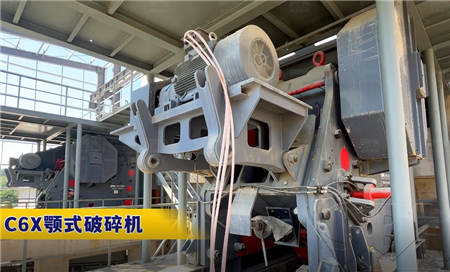
– HSI Crusher: Utilizes impact force with high-speed rotors and hammers to fracture rock. Better for softer or less abrasive materials (e.g., limestone, recycled concrete). Delivers higher reduction ratios and excels in producing uniform, finer particles.
2. Product Shape & Gradation
– Cone crushers yield more consistent, cubical output but may generate excess fines if not properly configured.
– HSI crushers create better-shaped sand but struggle with highly abrasive feed, leading to higher wear costs.
3. Operational Costs & Maintenance
– Cone crushers have higher upfront costs but lower wear-part replacement frequency in abrasive applications.
– HSI crushers offer lower initial investment but incur higher maintenance due to rotor and hammer wear in tough conditions.
HSI crushers are often preferred for sand due to their superior particle shaping, while cone crushers excel in secondary/tertiary crushing of hard rock.
Only if the material is non-abrasive; otherwise, cone crushers are more economical long-term.
Use hybrid or ceramic liners and limit feed to softer rocks.
A quarry in Texas switched from an HSI to a cone crusher for processing granite after excessive wear costs. The cone improved uptime by 30% despite slightly lower throughput. Conversely, a limestone operation in Florida adopted an HSI for its ability to produce high-quality sand at lower energy costs.
The choice between cone and HSI crushers depends on material hardness, desired product shape, and operational priorities. Cone crushers dominate hard-rock applications, while HSIs offer flexibility in softer materials with superior shaping capabilities. Proper selection ensures cost-effective aggregate production tailored to project needs.

