Processing Low-Grade Hematite: Challenges and Solutions in Crushing and Sand-Making Equipment
The global demand for iron ore continues to rise, driven by industrialization and infrastructure development. However, high-grade hematite reserves are dwindling, forcing the mining industry to focus on low-grade hematite processing. Efficient crushing and sand-making equipment play a pivotal role in maximizing yield and reducing waste in this sector.
Low-grade hematite typically contains 30-50% iron content, requiring extensive beneficiation to meet commercial standards. The process involves crushing, grinding, magnetic separation, and flotation. Crushing is the first critical step, where raw ore is reduced to manageable sizes for further processing. Modern sand-making equipment, such as vertical shaft impactors (VSI) and cone crushers, ensures optimal particle size distribution, enhancing downstream efficiency.
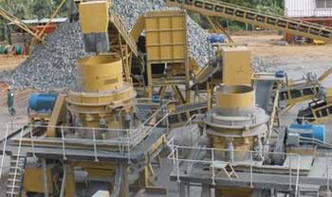
1. Jaw Crushers: Primary crushing of large hematite chunks into smaller fragments (150-300 mm).
2. Cone Crushers: Secondary crushing to achieve finer particles (20-50 mm) with high throughput.
3. Vertical Shaft Impact (VSI) Crushers: Tertiary crushing and sand-making, producing uniform, cubical aggregates ideal for grinding and separation.
4. High-Pressure Grinding Rolls (HPGR): Energy-efficient alternative for fine crushing, reducing energy consumption by 20-30%.
Q1: Can low-grade hematite be processed without beneficiation?
A: No, beneficiation is essential to upgrade iron content to marketable levels (≥60% Fe).
Q2: What’s the ideal crushing circuit for hematite?
A: A three-stage system (jaw + cone + VSI) balances efficiency and product quality.
Q3: How to mitigate dust in hematite crushing?
A: Enclosed systems with wet suppression or bag filters are effective.
A Brazilian mine processing 5 Mtpa of low-grade hematite adopted a VSI crusher for tertiary crushing, achieving:
Advancements in crushing and sand-making technologies are unlocking the potential of low-grade hematite. Investing in robust, automated equipment ensures sustainable and profitable operations in the evolving iron ore market.

