The Role of Prospector’s Mortar and Pestle in Modern Aggregate Processing
The aggregate and sand industry is a cornerstone of construction, providing essential materials for infrastructure, concrete, and road building. As demand for high-quality sand and crushed stone grows, efficient size reduction equipment like the prospector’s mortar and pestle—though traditionally small-scale—inspires principles still relevant in modern crushing and grinding machinery.
Global urbanization drives the need for processed aggregates, with strict gradation requirements for applications like asphalt or ready-mix concrete. While large-scale jaw crushers, cone crushers, and vertical shaft impactors dominate commercial production, the simplicity of mortar-and-pestle mechanics persists in lab settings for sample preparation and quality control.
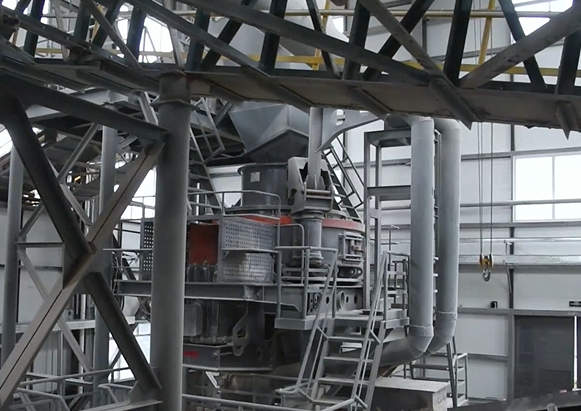
The prospector’s mortar and pestle symbolize manual size reduction, relying on compressive force—a principle scaled up in mechanized crushers. Key features of modern equivalents include:
1. Can mortar-and-pestle principles apply to industrial crushing?
Yes—impact and compression mechanics are foundational in designs like gyratory crushers.
2. What are the limitations of manual methods?
Throughput and particle consistency are impractical for large volumes; automation is essential.
3. How is product fineness controlled in modern systems?
Screening and closed-circuit grinding replace manual sieving, enhancing efficiency.
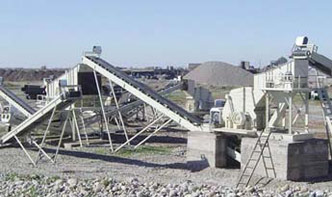
A quarry in Texas adopted a hybrid approach: lab technicians used mortar-and-pestle prototypes to test ore hardness before configuring industrial crushers. This reduced trial runs by 30%, optimizing liner selection and energy use in primary crushing stages.
While the prospector’s mortar and pestle remain emblematic of rudimentary size reduction, their legacy informs today’s high-efficiency crushing technologies. Balancing tradition with innovation ensures the aggregate industry meets both quality and sustainability goals.
—
Note: For large-scale operations, consult engineered solutions like jaw crushers or HPGRs, which integrate these principles at production capacities.

