Limestone Processing in Industrial Chemistry: Crushing and Sand-Making Equipment for Aggregate Production
Industry Background
The global construction and infrastructure sectors heavily rely on high-quality sand and aggregate materials, with limestone being a key raw material due to its abundance, durability, and versatility. Industrial chemistry plays a pivotal role in optimizing limestone processing, transforming raw ore into precisely graded aggregates for concrete, asphalt, and road base applications. Modern crushing and sand-making equipment ensures efficient particle size reduction, shaping, and purification, meeting stringent industry standards.
Core Equipment and Technologies
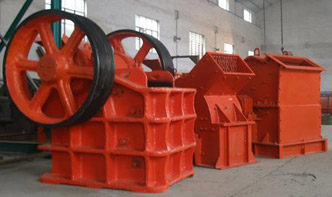
1. Primary Crushing: Jaw crushers or gyratory crushers break large limestone blocks into smaller fragments (typically <200mm). High-pressure grinding rolls (HPGR) are increasingly adopted for energy-efficient pre-crushing.
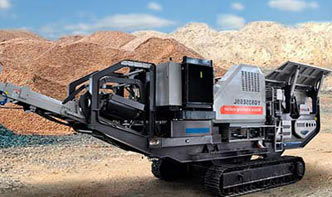
2. Secondary/Tertiary Crushing: Cone crushers or impact crushers further reduce limestone to 20–50mm, ideal for feed material to sand-making machines.
3. Sand-Making Stage: Vertical shaft impact (VSI) crushers are the backbone of artificial sand production, using a “rock-on-rock” or “rock-on-iron” principle to create cubical, well-graded particles (0–5mm). Advanced models feature hydraulic adjustment and automated control for real-time optimization.
4. Screening and Washing: Vibrating screens classify aggregates, while log washers or attrition scrubbers remove clay and impurities, enhancing product purity.
Key Advantages of Modern Systems
FAQ Section
Q1: How to choose between VSI and HSI crushers for limestone?
A: VSI crushers produce finer, more cubical sand but require higher maintenance for abrasive limestone. HSI crushers offer lower operating costs for medium-hardness limestone but may yield less uniform shapes.
Q2: What is the typical limestone-to-sand yield ratio?
A: Depending on moisture and clay content, 1 ton of limestone yields ~0.6–0.8 tons of sand after crushing and washing.
Q3: How to mitigate dust in dry processing?
A: Enclosed conveyors, bag filters, and mist spraying systems are effective solutions.
Engineering Case Study
A quarry in Texas, USA, upgraded to a 500tph limestone processing line featuring a VSI-1145 sand maker and multi-stage screening. The system achieved:
Conclusion
Innovations in crushing and sand-making equipment, driven by industrial chemistry principles, are revolutionizing limestone processing. By integrating automation, energy-saving designs, and environmental safeguards, producers can meet the growing demand for high-performance aggregates while adhering to sustainability goals.

