Design and Development of a Granite Quarry Site: Key Considerations for Crushing and Sand-Making Equipment
The granite quarrying industry plays a pivotal role in construction and infrastructure development, supplying high-quality aggregates for concrete, asphalt, and road base materials. With increasing demand for sustainable and efficient production, the design and development of a granite quarry site require careful planning, advanced crushing equipment, and optimized workflows.
Granite is a hard, abrasive rock, making its processing challenging yet rewarding due to its durability and aesthetic appeal. The global demand for crushed stone and manufactured sand (M-sand) has surged, driven by urbanization and stricter regulations on natural sand mining. Modern quarry operations prioritize automation, energy efficiency, and environmental compliance to reduce waste and emissions.
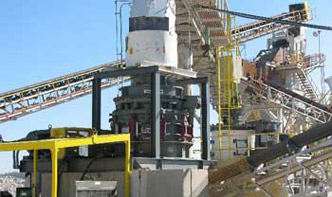
1. Primary Crushing: Jaw crushers or gyratory crushers are used to break down large granite blocks (up to 1,500 mm) into smaller fragments (~250 mm). High-capacity models with rugged designs are essential to handle abrasive materials.
2. Secondary/Tertiary Crushing: Cone crushers or impact crushers further reduce granite to 20–50 mm. Multi-stage crushing ensures uniform particle size and minimizes over-crushing.
3. Sand-Making Equipment: Vertical shaft impact (VSI) crushers are ideal for producing high-quality M-sand with optimal gradation. Advanced rotor designs and rock-on-rock crushing minimize wear and improve cubical particle shape.
4. Screening and Washing: Vibrating screens classify aggregates, while sand washers remove impurities (e.g., clay, dust) to meet construction standards.
Q1: What is the ideal production capacity for a medium-sized granite quarry?
A: A well-designed plant can produce 200–500 tons per hour, depending on equipment configuration.
Q2: How to reduce wear in granite crushing?
A: Use manganese steel liners, maintain proper feed size, and avoid metal contamination.
Q3: Can granite waste be recycled?
A: Yes, leftover fragments can be reprocessed into aggregates or used for landscaping.
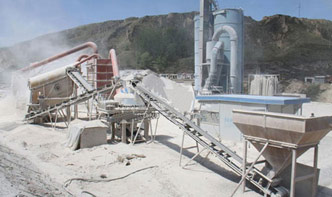
A quarry in Texas upgraded to a 3-stage crushing system (jaw + cone + VSI) with automated screening, achieving a 30% increase in M-sand yield while reducing power consumption by 15%. The plant now produces 400 tph of high-quality aggregates for local infrastructure projects.
Efficient granite quarry development hinges on selecting robust crushing equipment, optimizing workflows, and adhering to sustainability standards. Investing in advanced technology ensures long-term profitability and environmental responsibility.

