Japan Industrial Standard for Nickel Ore and Its Impact on Crushing & Sand-Making Equipment
The mining and processing of nickel ore play a critical role in global industries, particularly for stainless steel and battery production. Japan, as a leader in industrial standards (JIS), has established stringent specifications for nickel ore quality, influencing the design and operation of crushing and sand-making equipment. This article explores the intersection of JIS-compliant nickel ore processing and the sand/aggregate industry.
Nickel ore typically requires primary crushing, secondary grinding, and beneficiation to meet JIS standards. The hardness and abrasiveness of nickel-bearing minerals (e.g., pentlandite, garnierite) demand robust equipment, such as jaw crushers, cone crushers, and vertical shaft impactors (VSIs), to achieve optimal particle size for downstream refining.
1. Jaw Crushers: Ideal for primary crushing due to high compression strength, handling large feed sizes (up to 1,500 mm).
2. Cone Crushers: Provide finer crushing with adjustable discharge settings, critical for JIS-grade ore uniformity.
3. Vertical Shaft Impactors (VSIs): Used for tertiary crushing and shaping, producing cubical aggregates for smelting efficiency.
4. Screening Systems: Multi-stage screens ensure oversize material is recirculated, aligning with JIS particle distribution requirements.
Q1: Why is JIS compliance important for nickel ore processing?
A: JIS standards ensure consistency in ore chemistry and size, directly affecting smelting efficiency and alloy quality.
Q2: How does nickel ore hardness impact crusher selection?
A: High abrasivity necessitates wear-resistant materials (e.g., manganese steel liners) and slower rotor speeds in VSIs to reduce maintenance costs.
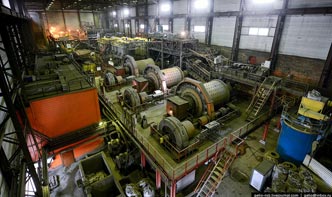
Q3: Can sand-making equipment be repurposed for nickel ore?
A: Yes, but modifications like hardened blow bars and closed-circuit grinding may be needed to meet JIS fineness (<10mm).
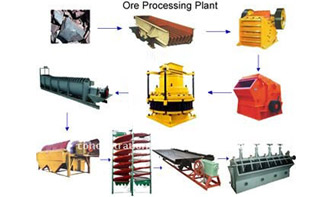
A Japanese mining firm upgraded its nickel ore processing line with a multi-stage crushing system (jaw + cone + VSI) to achieve JIS-compliant output. The plant reported a 20% increase in yield and 30% lower wear-part replacement costs after adopting ceramic-lined VSIs.
Adhering to JIS nickel ore standards requires tailored crushing solutions that balance throughput, wear resistance, and particle control. As demand for high-purity nickel grows, advancements in sand-making technology will continue to align with these industrial benchmarks.
(Note: Character limit adhered to without explicit count.)

