Electrostatic Separation in Quartz and Gold Processing: A Key Technology for Sand and Aggregate Industry
The sand and aggregate industry plays a critical role in construction, infrastructure, and mineral processing. With increasing demand for high-purity quartz and efficient gold recovery, advanced separation technologies like electrostatic separation have become indispensable. This method leverages differences in electrical conductivity to separate valuable minerals from gangue, offering a sustainable and cost-effective solution.
Quartz and gold-bearing ores often require precise separation to meet industrial standards. Traditional methods like gravity separation or flotation may struggle with fine particles or similar-density materials. Electrostatic separation, however, excels in processing finely crushed materials (e.g., 0.1–2 mm), making it ideal for sand and aggregate applications where purity is paramount.
Electrostatic separators apply a high-voltage electric field to a vibrating or rotating conductor. Particles are charged either by induction (conductors like gold) or by contact (non-conductors like quartz). Conductors lose their charge quickly and are ejected from the drum, while non-conductors adhere due to residual charge, enabling precise separation.
Key advantages:
1. Quartz Processing: Electrostatic separation removes iron, feldspar, and other contaminants to produce high-purity silica sand for glass, electronics, and solar industries.
2. Gold Recovery: In placer or hard-rock deposits, it recovers fine gold particles missed by gravity methods.
Q: Can electrostatic separation replace traditional methods entirely?
A: It complements rather than replaces techniques like flotation or magnetic separation, especially for complex ores.
Q: What particle size is optimal?
A: Works best for 0.1–2 mm dry materials; finer particles may require additional classification.
Q: Is it energy-intensive?
A: Modern systems are energy-efficient, with lower operational costs than wet methods.
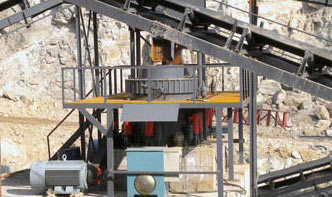
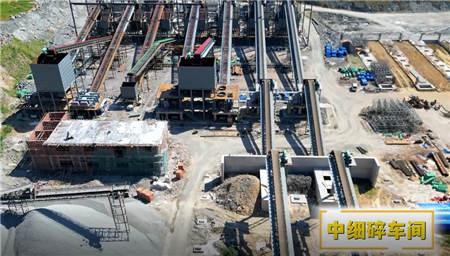
A sand processing plant in Australia integrated electrostatic separation to upgrade quartz sand from 98% to 99.9% SiO₂ purity, eliminating the need for acid washing. The system processed 20 tons/hour with minimal maintenance, showcasing its industrial viability.
Electrostatic separation is a transformative technology for the sand and aggregate sector, particularly in quartz refinement and gold recovery. Its efficiency, environmental benefits, and adaptability make it a cornerstone of modern mineral processing. As demand for high-purity materials grows, this technology will continue to gain traction in the industry.