The Growing Demand for Artificial Sand Making Machines in the Aggregates Industry
Industry Background
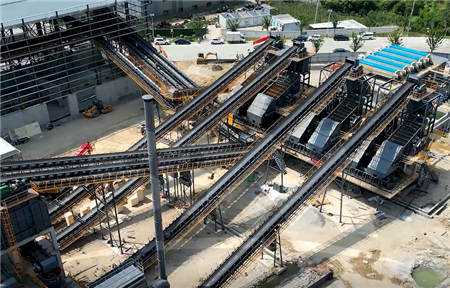
The global construction industry is witnessing a surge in demand for high-quality sand and aggregates, driven by urbanization and infrastructure development. However, the depletion of natural sand resources and environmental concerns have led to the rise of manufactured sand (M-Sand) as a sustainable alternative. Artificial sand making machines, also known as vertical shaft impact (VSI) crushers or sand makers, play a pivotal role in producing well-graded, cubical-shaped M-Sand that meets stringent industry standards.
Core Technology and Advantages
Modern sand making machines leverage advanced crushing principles, such as rock-on-rock or rock-on-iron crushing, to achieve optimal particle shape and gradation. Key features include:
Compared to traditional methods, these machines offer superior control over sand quality while reducing reliance on natural deposits.
Pricing Factors
The cost of artificial sand making machines varies based on:
1. Capacity: Ranging from 30–500 TPH (tons per hour).
2. Automation Level: Semi-automatic vs. fully intelligent systems.
3. Brand and After-Sales Support: Established manufacturers often provide better longevity and service.
4. Additional Features: Dust suppression systems or hybrid power options.
While entry-level models start around $50,000, high-capacity units can exceed $300,000. Total operational costs (maintenance, power, labor) should also be factored in.
FAQs
1. Can M-Sand replace natural sand entirely?
Yes, with proper gradation and silt control, it often outperforms natural sand in strength and workability.
2. What’s the typical ROI period?
Depending on project scale, most operators recover costs within 1–2 years.
3. How to mitigate dust pollution?
Integrated water spray systems or enclosed configurations are effective solutions.

Case Study
A quarry in Texas replaced its natural sand extraction with a 200-TPH VSI crusher, achieving:
Conclusion
Investing in artificial sand making technology aligns with both economic and environmental goals. As regulations tighten and natural resources dwindle, the shift toward M-Sand is inevitable, making these machines a cornerstone of future-ready aggregate plants.

